
Sense 08 — Drawn to Water
On water and attention

This week, several conversations have unexpectedly returned me to water.
Across different projects and discussions, I kept noticing the same thing: how instinctively people respond to it. Not necessarily to large landscapes or dramatic bodies of water, but to smaller encounters.
The sound of it collecting somewhere quiet. The movement of light across its surface. The instinct people have to reach towards it before they’ve consciously decided to do so.
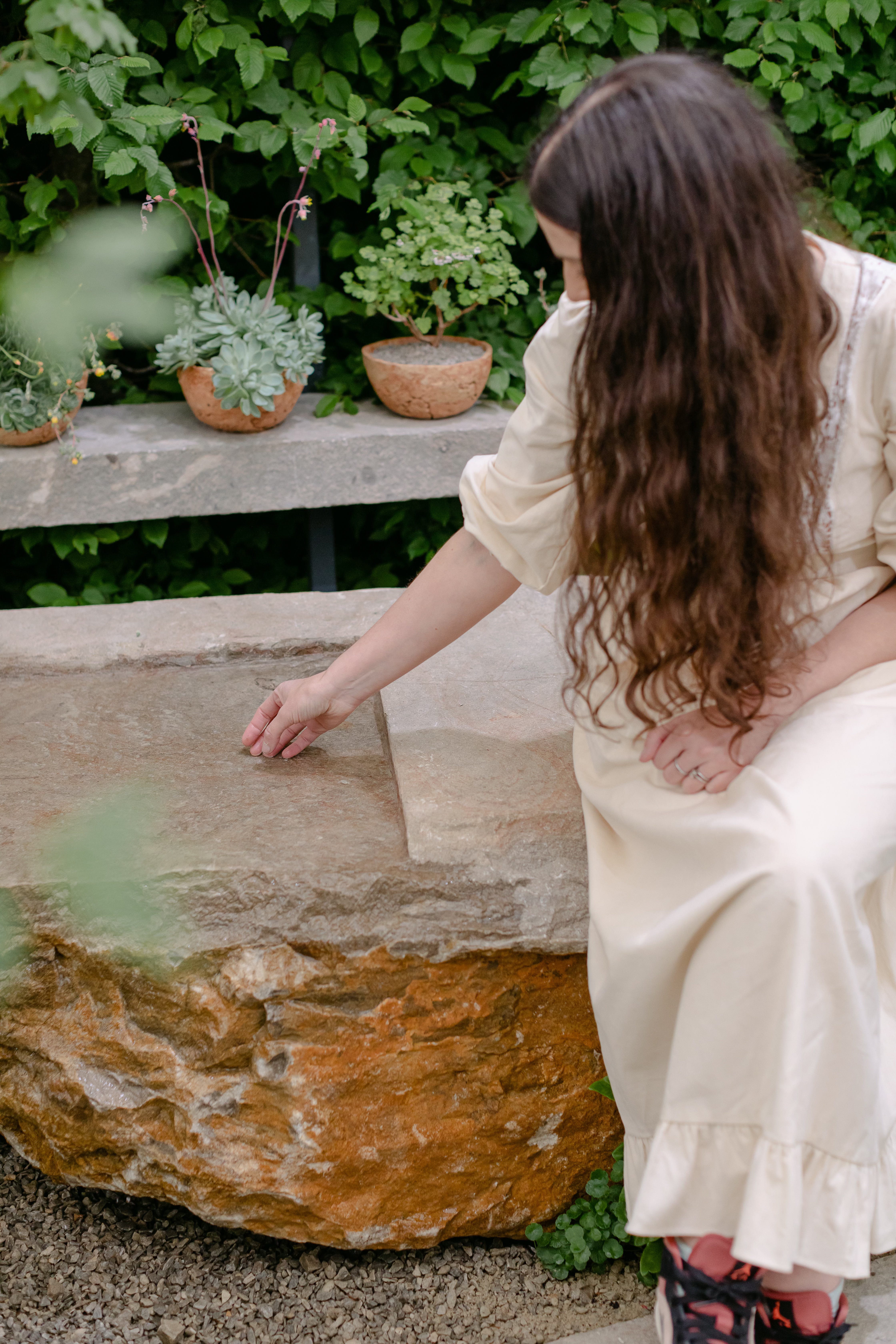
I’ve been thinking in particular about a stone water bench from a project a few years ago.
The bench was made from a single boulder. Rather than heavily shaping the stone, it was simply cut to create a shallow space where water could gather and settle. The intervention was minimal. Water held in stone.
What I remember most clearly is how people approached it.
Some sat quietly beside it. Others instinctively reached out to touch the water with their fingertips before sitting down. Children ran their hands through it without hesitation. The sound was soft, but enough to alter the atmosphere around it.
Even now, thinking back to it, I remember the temperature of the stone more than its appearance. The coolness held within it. The slight darkening of the surface where the water rested.
There is something grounding about being close to water, even in very small amounts. Perhaps it is because water is felt as much as it is seen. We hear it before we reach it sometimes. We feel changes in temperature and air around it. Light moves differently across its surface. Attention shifts almost automatically towards it.
As a landscape architect, I often think about water in practical ways: drainage, flooding, movement across land, periods of drought and excess. But alongside these larger systems, there is also the quieter relationship people have with water in everyday spaces.
A bowl collecting rainwater. A trough. A stream beside a path. The sound of water moving somewhere out of view.
Small presences that alter how a place feels to be within.
The bench was first made for a Chelsea garden several years ago, but what feels important now is that it remained afterwards. It continues to be used at Aspens, becoming part of daily life rather than existing only for a single week of display.
That continuation feels meaningful.
Landscapes change over time, but perhaps part of good design is allowing certain things to remain useful beyond the moment when they were first created.
I’ve found myself returning to the idea that water does not need to announce itself loudly in order to shape our experience of a place.
Sometimes a shallow pool held quietly in stone is enough.